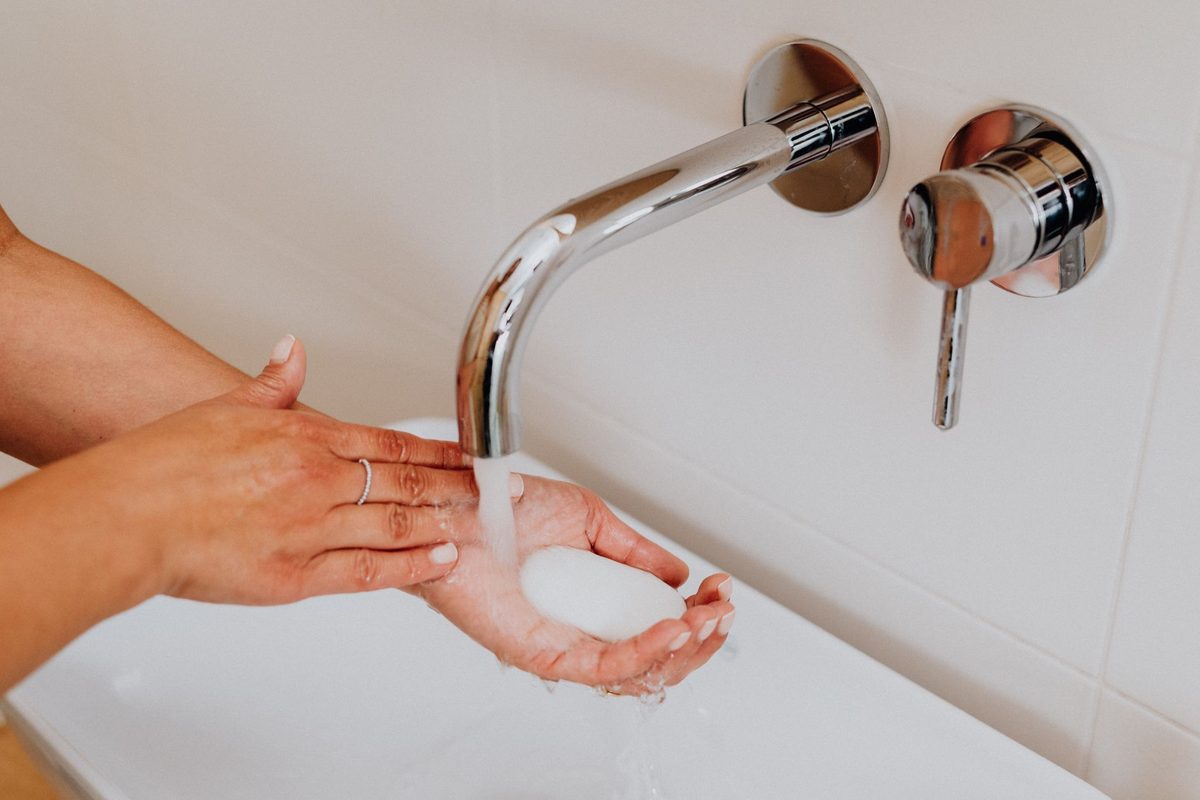
The ring is already wet when the thought lands: should this have come off? Most people wear jewelry straight through showers, swims, and sleeps, because taking it off introduces the bigger risk — a ring left on a hotel nightstand or slipped down a drain is gone for good. That instinct is half right.
Plain water almost never harms jewelry. What harms it is what rides in the water — soap, chlorine, salt, sulfur — plus the mechanical abuse of snagging and the simple physics of a finger that shrinks in the cold. Here is the answer by metal, the stone rules that overrule it, and the few pieces you can genuinely never take off.
The Metal-by-Metal Answer
| Metal | Shower | Pool or hot tub | Ocean | Sleep |
|---|---|---|---|---|
| Solid 14k/18k gold | Safe; soap film dulls it | Avoid — chlorine attacks alloys and solder | Metal safe; ring easy to lose | Safe |
| Platinum | Safe; same soap film | Avoid — same chlorine caution | Safe metal, risky fingers | Safe |
| Sterling silver | Tolerated; dry it after | Never — turns black fast | Avoid — salt pits it | Safe |
| Gold-filled | Survives it | Never — chlorine enters at worn edges | Avoid | Safe |
| Gold-plated / vermeil | Every shower shortens its life | Never | Never | Safe |
| Stainless steel / titanium | Safe | Safe | Safe | Safe |
Two cells in that table surprise people. Gold-plated jewelry is the only metal the shower itself harms — each hot, soapy cycle strips microns from a layer that started out thinner than a hair. And sterling silver is fine at the sink yet uniquely terrible in the pool. If you are not sure which construction your "gold" piece actually is, our breakdown of gold-filled vs plated vs vermeil explains why the difference is measured in microns.
What the Water Is Really Carrying
Water is the vehicle, not the weapon. Four passengers do the damage:
- Soap and shampoo film. Surfactants and mineral residue coat everything, and on faceted stones the film lands exactly where light needs to enter. A diamond that suddenly looks dead under bathroom lighting is usually just dirty — this is why jewelers say a clean diamond looks bigger. Twenty minutes in warm water with a drop of dish soap and a soft brush brings the sparkle back.
- Chlorine. Pools run roughly 1-3 parts per million, hot tubs similar but hotter, and heat accelerates the chemistry. Chlorine attacks the alloy metals in karat gold — the copper, nickel, and zinc that make up about 42% of a 14k ring — and it goes after solder joints and rhodium plating first. For sterling silver it is worse: a single swim can leave a black film, which is exactly what happened in my silver necklace turned black after the pool.
- Salt. Ocean water is mildly corrosive to alloys, and the beach adds two mechanical problems: sand abrades softer stones, and cold water shrinks your fingers. Vasoconstricted, wet, sunscreened fingers are the number-one reason rings are lost at the beach. Rings come off before the water, not at the towel.
- Sulfur. Hot springs — and some well water — blacken silver on contact and can discolor lower-karat gold.
Stone Rules Overrule Metal Rules
A platinum band survives everything in the table above. The opal set in it does not. The metal tells you half the story; the stone has its own rules, and the strictest rule wins.
- Diamond, sapphire, and ruby (Mohs 9-10) shrug off water and temperature swings. These are the stones that make "never take it off" possible — they top our guide to gemstones that survive everyday wear.
- Emerald (7.5-8) is almost always oiled or resin-filled, and hot soapy water strips that filler out — an emerald can look noticeably more included after a season of showers. Thermal shock is the second risk: moving from a hot tub into cool air can open a fissure that sat quietly for years.
- Opal (5.5-6.5) is hydrated silica. Ethiopian hydrophane opals literally absorb water and temporarily lose their play-of-color; repeated soak-and-dry cycles can craze the surface. Treat every opal as never-wet.
- Pearl (2.5-4.5) follows the last-on-first-off rule. Shampoo and hot water attack the calcium-carbonate nacre, and a wet silk knot stretches and weakens.
- Turquoise and other porous stones absorb water and soap and can discolor permanently.
The full Mohs figures and care notes for each stone live on the gemstone durability chart.
The Problem With Sleeping in Jewelry
Sleep is gentler than a pool, but it is a mechanical test rather than a chemical one. Chains kink at their weakest link, and a fine chain that catches on a pillowcase all night is slowly work-hardened until it snaps. Prongs snag on knit blankets, and each snag torques the metal a fraction of a millimeter — enough, over a year, to lose a stone. Stud earrings are the quiet casualty: posts bend, backs migrate toward the piercing, and flat-back "sleeper" studs exist for a reason.
Plain bands are fine overnight. Anything with prongs, pavé, or a chain under about 1.5mm belongs in the dish on the nightstand.
What You Can Actually Never Take Off
Two categories genuinely earn "never remove" status:
- A plain band in solid gold or platinum — no stones, no seams, no plating. It needs an occasional soap-film cleaning and nothing else.
- Implant-grade titanium or stainless steel studs and simple chains — chemically boring metals that shrug off shower, pool, ocean, and gym alike.
For everything else, a thirty-second habit covers it: jewelry off before water, a dedicated dish by the sink and the bed, pearls last on and first off. And if a piece has already been through the pool, the fix is usually a careful polish rather than a panic — our sterling silver cleaning guide walks through it.
— Simply Jems Editorial Studio, Canadian artisan roots since 2014.
Frequently Asked Questions
Can you shower with sterling silver jewelry?
Occasionally, yes — plain water will not harm it, but humidity and soap accelerate tarnish, so dry the piece afterward. Never wear sterling in a pool or hot tub: chlorine turns it black within a single swim.
Is it bad to sleep with a ring on?
A plain band is fine overnight. Rings with prongs or pavé are the problem — bedding snags slowly bend prongs, and a season of snagging is how stones get lost. If the ring has a stone, the nightstand dish is the safer habit.
Does chlorine damage gold jewelry?
Yes, slowly. Chlorine attacks the alloy metals in karat gold — the copper, nickel, and zinc that make up 42% of a 14k ring — and it eats solder joints and rhodium plating first. One pool visit will not destroy a ring; a summer of daily swims can.