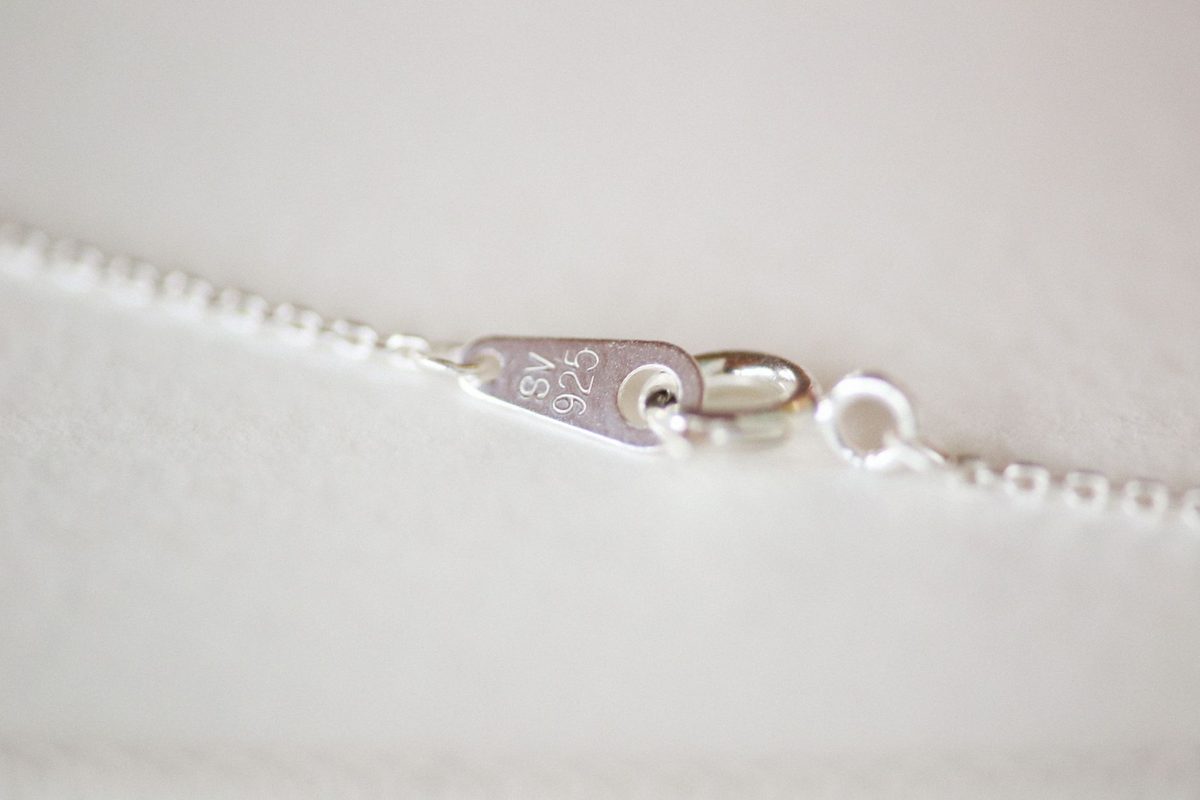
You pull your silver necklace off after a swim and the chain that was bright this morning is now charcoal gray, almost black. The immediate fear is that you have ruined it, but the color change is usually a surface reaction, not a death sentence for the metal. Solid 925 sterling silver can almost always be brought back. The deciding factor is what else is on the chain — stones, plating, or an oxidized antique finish — because those extras change which recovery method is safe.
Pool water is far worse for silver than ordinary air tarnish because it contains chlorine or hypochlorite disinfectants and, in many pools and hot tubs, elevated sulfur compounds. Silver reacts with sulfur compounds to form silver sulfide, the familiar black tarnish, and with chlorine to form silver chloride, a dull gray or whitish film that darkens further in light. The 7.5% copper in 925 sterling makes it worse: copper corrodes faster than silver and its own dark oxides and sulfides speed up the discoloration. In normal air this takes days or weeks. In chlorinated water the reaction is accelerated by heat and concentration, so a hot tub can darken a chain in a single soak. Plated and vermeil pieces are especially at risk because the thin precious-metal layer is not a perfect seal; once a tiny gap opens at a clasp, link, or scratch, the base metal underneath can corrode and the plating can lift. Solid 925 has no base metal to expose, so however bad the surface looks, the piece is intact and recoverable.
1. Triage: Identify the Piece Before You Touch It
The same black color means different things on different pieces. Start with a loupe or bright light and decide which category you are in.
| Piece type | What the black likely is | Safe method | Avoid |
|---|---|---|---|
| Solid 925, plain | Silver sulfide / chloride tarnish | Warm soapy brush; aluminum-foil bath for heavy tarnish; polishing cloth | Steel wool, toothpaste |
| 925 with hard stones (diamond, sapphire, ruby, quartz) | Surface tarnish on the metal | Warm soapy water, soft brush, careful drying | Aluminum-foil bath unless you can mask all stones |
| 925 with porous or organic gems (pearl, opal, turquoise, coral, malachite) | Metal tarnish; gem may be damaged too | Damp microfiber cloth only on metal; jeweler for heavy tarnish | Soaking, baking soda, any dip, ultrasonic |
| Plated or vermeil | Plating wear or base-metal corrosion | Damp cloth; accept patina; re-plate when needed | Polishing, dips, abrasive cloth |
| Oxidized or antiqued finish | Intentional black patina in recessed areas | Dry soft cloth; leave the patina alone | Any tarnish-removal method |
If a plated piece is showing black in patches where the underlying metal is exposed, polishing will only make it worse. A jeweler can re-plate most chains for $40 to $120 depending on length, thickness, and the metal used. That is often the only honest fix once the base metal shows through.
2. First Response: Rinse Immediately
Time matters. As soon as you see the discoloration:
- Rinse the necklace under cool, fresh running water for 20 to 30 seconds. This dilutes chlorine and salt before they keep reacting.
- Pat it dry with a lint-free microfiber cloth. Do not rub while the metal is gritty; chlorine residue can act like a mild abrasive.
- If the piece is plain solid 925, move to the soapy bath. If it holds stones, is plated, or has an oxidized finish, stop at the damp-cloth stage and read the warnings below.
A quick freshwater rinse will not remove existing tarnish, but it stops the reaction from getting worse and prevents chlorine from drying into a residue that can etch the surface over time.
3. The Standard Soapy Bath
For plain solid 925, or 925 set with hard stones like diamond, sapphire, ruby, or amethyst, the safest next step is the same 4-step jewelers' bath our care guide describes:
- Fill a small bowl with warm water — roughly 40 °C, comfortable to the touch.
- Add 2 to 3 drops of fragrance-free dish soap. Scented formulas often contain oils and solvents that leave a film.
- Submerge plain pieces for 3 to 5 minutes. For pieces with hard stones, keep the soak to 1 to 2 minutes and keep the brush away from the stone table.
- Use an extra-soft baby toothbrush or a jeweler's brush to clean between links and behind clasps.
- Rinse in room-temperature water and dry thoroughly with a microfiber cloth. Trapped moisture is what turns a clean piece tarnished again.
This will lift light tarnish and most pool residue. If the black is still there, proceed to the electrochemical method — but only for the right kind of piece.
4. The Aluminum-Foil and Baking Soda Method
This is the classic "miracle" tarnish removal that works by electrochemistry, not scrubbing. It is fast and effective, but it is also aggressive. It is only safe for plain, solid 925 sterling silver with no stones and no antique patina.
What you need:
- A glass or ceramic dish large enough to lay the chain flat.
- A sheet of aluminum foil, shiny side up.
- 1 tablespoon of baking soda per 500 ml of hot tap water. Use hot water, about 60 to 70 °C, not boiling.
- Tongs or a wooden spoon to move the chain.
How to do it:
- Line the dish with foil, shiny side up.
- Place the silver directly on the foil, making sure it touches the metal in several places.
- Sprinkle baking soda over the silver.
- Pour the hot water over it. You will see a slight bubbling and, within a few seconds, the tarnish begin to lift.
- Let the piece sit for 30 seconds to 2 minutes, then flip and repeat if needed.
- Remove with tongs, rinse under cool water, and dry immediately.
Do not use this method on:
- Oxidized or antiqued finishes — it will strip the intentional black patina.
- Pieces with glued stones, pearls, opal, turquoise, coral, malachite, or any porous or heat-sensitive gem — the heat and alkaline solution can loosen adhesives, damage nacre, and discolor porous stones.
- Plated or vermeil pieces — the reaction can remove the thin surface layer along with the tarnish.
If the black does not move after two short sessions, the discoloration is likely not tarnish alone. Stop and take the piece to a bench jeweler.
5. When to Consider a Chemical Dip
Commercial silver dips remove tarnish in seconds, but they work by dissolving a microscopic layer of metal along with the tarnish. They are a last resort, not a first choice, and they should never be used on pieces that contain stones, because the acid can etch gems, attack glued settings, and leave residues in porous material.
If your piece is plain solid 925, you can use a thiourea-based dip exactly once in a while as a rescue tool:
- Dip for no more than 10 to 15 seconds.
- Rinse immediately in cool water for 30 seconds.
- Dry completely and finish with a polishing cloth.
- Do not use on chains with soldered decorative elements that may trap liquid.
Repeated dipping thins the metal over time, so reserve it for emergencies and return to soap or the foil method for routine care.
6. The Finishing Step: A Polishing Cloth
Whether you used the soapy bath, the foil method, or a careful dip, the final step is always a dedicated silver polishing cloth. These are impregnated with a very mild compound that removes the last thin film of tarnish and leaves a protective residue. Wipe in long, straight strokes, not circles, and do not press hard. A few passes are enough.
For plated or vermeil pieces, skip the polishing cloth and use the softest microfiber you have. Every pass removes a fraction of a micron of plating. When the base metal starts showing, it is time for a jeweler to re-plate rather than more home polishing.
7. Prevention: Keep It From Happening Again
Tarnish chemistry is a matter of exposure. The best fix is to remove the exposure:
- Take silver off before swimming, showering, or entering a hot tub. Chlorine, bromine, and sulfur in treated water all accelerate tarnish and can weaken solder joints over time.
- Put jewelry on last, after perfume, lotion, and hairspray. These products often contain sulfur compounds and acids that begin tarnish before you even leave the house.
- Store clean, dry silver with anti-tarnish strips in an airtight bag or box. Keep it away from bathroom humidity and rubber, which is high in sulfur.
- For a piece you wear constantly, consider rhodium plating. It is a thin, hard, tarnish-resistant layer over sterling silver that reflects light like platinum. The trade-off is that rhodium will eventually wear off at contact points and require re-plating, typically every 1 to 3 years depending on wear. The cost is usually $60 to $150 for a necklace.
For everyday gemstones you are not sure about, our gemstone directory lists Mohs hardness and safe cleaning methods for the most common stones.
— Simply Jems Editorial Studio, Canadian artisan roots since 2014.
Frequently Asked Questions
Can chlorine permanently ruin sterling silver?
Chlorine does not usually ruin solid 925 sterling silver permanently, but it accelerates tarnish into a black or dull gray coating and can weaken thin chains over repeated exposure. The discoloration is typically a surface layer that can be removed with the right cleaning method.
Is black tarnish on silver always reversible?
Black silver sulfide and chloride tarnish are generally reversible on solid 925. If the piece is plated and the black shows the base metal underneath, or if the black is a deliberate oxidized finish, you cannot polish it away without also removing the design or plating.
Can I use boiling water with the aluminum-foil and baking soda method?
No. Use hot but not boiling tap water, ideally around 60 to 70 °C. Boiling water can loosen adhesives, thermal-shock certain stones, and deform thin or plated silver.