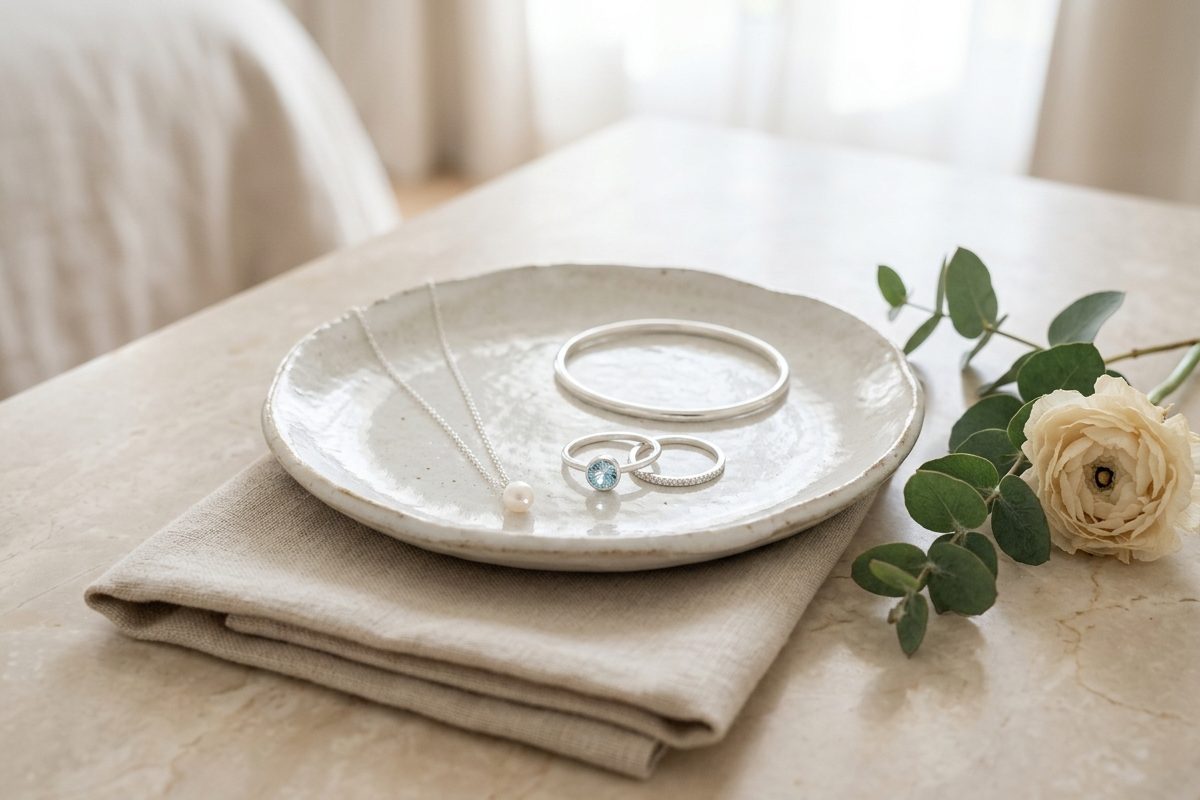
There is nothing quite as satisfying as seeing an heirloom piece of 925 sterling silver regain its mirror-like luster. However, when precious metals are set with natural gemstones, improper cleaning is the single leading cause of irreversible damage in fine jewelry.
Toothpaste, abrasive sponges, harsh chemical dips, and ultrasonic cleaners can strip luster from organic pearls, crack fracture-filled emeralds, and dull porous stones like turquoise. Here is the jeweler-tested protocol for keeping your jewelry in mint condition.
1. Why Does Sterling Silver Tarnish?
Pure silver (99.9% fine silver) does not tarnish easily, but it is too soft to withstand daily ring or clasp wear. 925 Sterling Silver contains 92.5% pure silver alloyed with 7.5% copper for structural strength.
It is this copper content that reacts with airborne sulfur compounds, humidity, perfume, and natural skin oils to form silver sulfide—the dark patina known as tarnish. Wearing your silver regularly actually slows tarnish down, as the natural friction of clean skin helps polish the metal.
2. Safe Cleaning by Gemstone Type
Before touching any cleaning solution, identify which stones are set in your piece. Never treat all jewelry the same way:
| Category | Common Gemstones | Safe Cleaning Method | Never Use |
|---|---|---|---|
| Hard / Durable | Diamond, Sapphire, Ruby | Warm soapy water, soft brush | Abrasive baking soda paste |
| Quartz & Feldspar | Amethyst, Citrine, Moonstone | Lukewarm water, gentle pat dry | Thermal shock (boiling water) |
| Brittle / Oiled | Emerald, Tanzanite, Peridot | Damp microfiber cloth only | Ultrasonic tanks, hot steam |
| Organic & Porous | Pearl, Opal, Turquoise, Coral | Soft dry cloth, gentle damp wipe | Soaking, alcohol, vinegar, soaps |
3. The Standard 4-Step Jewelers Bath
- Prepare the Bath: Fill a small ceramic bowl with lukewarm water (never hot). Add 2–3 drops of mild, fragrance-free dishwashing liquid.
- Brief Soak: Submerge hard gemstones and silver pieces for 3 to 5 minutes. (Skip soaking entirely for pearls and opals).
- Gentle Brush: Using an extra-soft baby toothbrush, gently buff behind the stone prongs where skin oils and lotions accumulate.
- Rinse & Thorough Dry: Rinse with clean room-temperature water. Pat dry immediately with a lint-free microfiber jeweler's cloth. Moisture left in settings accelerates tarnishing.
"Golden Rule: Jewelry should be the very last thing you put on in the morning (after perfume, lotion, and hairspray) and the first thing you take off at night."
4. Storing Your Collection for Maximum Longevity
- Keep pieces in anti-tarnish pouches or airtight velvet-lined boxes with silica gel packets.
- Store necklaces clasped and separated to prevent scratches and chain knotting.
- Never store fine jewelry in the bathroom, where shower steam and temperature swings degrade finishes.
5. What Not to Use (and Why)
Most jewelry damage we see is caused by cleaning, not wearing. The four repeat offenders:
- Toothpaste: contains hydrated silica abrasives harder than sterling silver. It polishes by cutting thousands of micro-scratches into the surface — the shine is real, and so is the permanent dulling that follows.
- Baking soda paste or the foil bath: the aluminum-foil electrochemical trick strips tarnish fast because it strips everything fast. On solid silver it is merely aggressive; on pieces with glued stones, oxidized detailing, or porous gems it dissolves adhesives, removes intentional patina, and can pit the stone itself.
- Commercial "dip" cleaners: most are thiourea-based acid baths. They work in seconds because they etch the surface chemically — leave a piece in too long and the silver comes out matte and permanently weakened. They are also fatal to pearls, opals, turquoise, and any stone with surface-reaching fractures.
- Ultrasonic tanks: cavitation bubbles hammer loose material out of settings — including the dirt you wanted gone and the oil filling inside an emerald, the glue under a pearl, or the stone itself if it has internal fractures. Diamonds and corundum tolerate it; almost nothing else should see the inside of one.
6. Cleaning Gold and Gold-Plated Pieces
Solid gold (14k or 18k) tolerates the same lukewarm soapy bath as silver and tarnishes far less. The danger zone is plated jewelry: gold vermeil is a layer typically 2.5 microns thick over sterling, and standard gold plating on fashion pieces can be under 0.5 microns. Every abrasive pass — polishing cloth, dip, or brush — removes a little of that layer permanently.
For plated pieces: skip the brush entirely, use a bare damp cloth, and accept a slight loss of brightness over time as the cost of ownership. When the base metal starts showing through, a jeweler can re-plate the piece — that service typically costs in the $40–$120 range depending on size and gold thickness.
7. How Often to Clean
Cleaning frequency should follow wear pattern, not the calendar:
| Wear pattern | Recommended routine |
|---|---|
| Daily ring or bracelet | Quick damp-cloth wipe weekly; full soapy bath monthly |
| Worn a few times a week | Soapy bath every 2–3 months |
| Occasional / evening wear | Wipe after each wear; bath only when dull |
| Stored long-term | Check every 6 months; clean before storing, not after |
The counterintuitive rule: silver worn often tarnishes slower, because skin friction continuously buffs the surface.
8. When to Take It to a Jeweler
Home care ends where repair begins. See a bench jeweler when you notice:
- A stone that moves or rattles — worn prongs are a lost stone waiting to happen; re-tipping typically costs $25–$60 per prong.
- Deep scratches or a bent shank — refinishing and reshaping typically runs $30–$80.
- Tarnish inside a hollow or intricate piece — chains, lockets, and filigree hold moisture you cannot reach safely at home.
- Anything plated that has worn through — re-plating restores the finish; home polishing only removes more of it.
An annual professional inspection on daily-wear rings is cheap insurance — most jewelers check prongs for free or a nominal fee.
— Simply Jems Editorial Studio, Canadian artisan roots since 2014.
Frequently Asked Questions
Can I use toothpaste to polish silver jewelry?
No. Toothpaste contains microscopic abrasive silicates with a Mohs rating higher than sterling silver. While it may look shiny initially, it leaves thousands of microscopic micro-scratches that accelerate dullness and tarnish accumulation over time.
Is the aluminum foil and baking soda hack safe?
It is only safe for plain, solid 925 sterling silver with zero stones. If used on pieces with glued settings, antique oxidation, or semi-precious stones, the electrochemical reaction will dissolve adhesives and damage stone clarity.