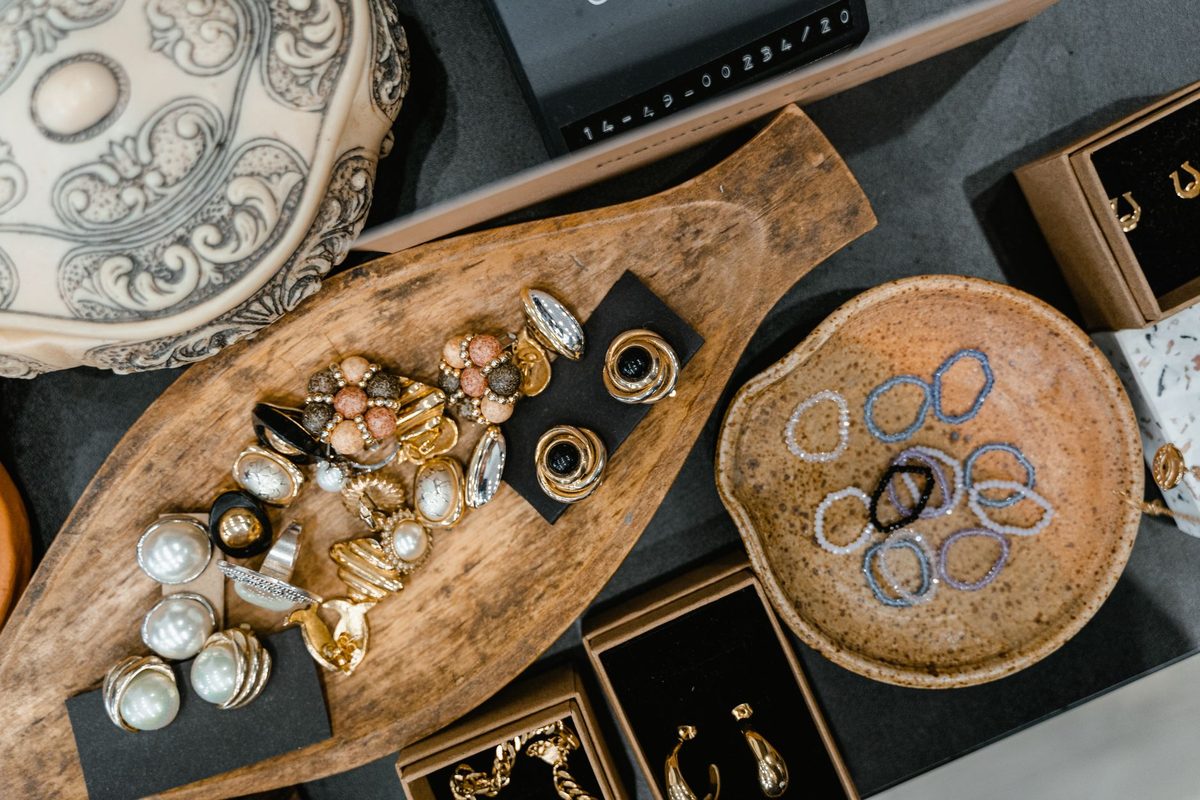
You open the jewelry drawer and pull up three necklaces at once. The silver earrings have darkened, a pearl is rubbing against a ring, and the little dish that looked tidy yesterday has become a pile. Most of these problems start with pieces touching, moving, or being put away damp.
A better system does not require a large velvet cabinet. It requires a separate place for each piece and storage that suits its materials. Here is how to sort the collection, slow tarnish, protect soft stones, and pack for travel without turning every morning into a knot-removal job.
Start with a dry bedroom drawer
Choose an interior drawer or covered box away from shower steam, sunny windows, radiators, and heating vents. A bathroom counter exposes jewelry to repeated humidity changes and product sprays. A windowsill adds heat and light; prolonged sunlight can also fade some colored stones, including amethyst.
Put jewelry away after a quick check. Wipe perspiration and lotion residue with a clean, soft cloth, then let any remaining moisture evaporate. Pearl strands wiped with a slightly damp cloth need time laid flat to dry, especially around drill holes and thread. Do not seal damp stringing inside a pouch.
Clean only as the piece allows. Our sterling silver and gemstone cleaning guide explains why a sapphire ring and a pearl necklace need different methods. Loose stones, bent clasps, and snagging prongs belong in a separate repair pouch, so they cannot catch another chain.
Avoid treating the bedside dish as permanent storage. It can serve as a temporary landing place for one piece, provided it sits well away from a sink and pets. Before adding a second item, move the first to its own compartment.
Prevent scratches by separating pieces
Mohs hardness measures scratch resistance, not resistance to being dropped. A harder stone can scratch a softer stone, and a gemstone can abrade the metal beside it. Two diamond rings can also damage each other when loose in the same pouch.
| Material | Mohs hardness | Storage priority |
|---|---|---|
| Diamond | 10 | Separate from every other piece, including other diamonds |
| Sapphire and ruby | 9 | Individual padded slot; protect exposed stone edges |
| Emerald | 7.5–8 | Own soft compartment; avoid pressure and impacts |
| Amethyst and citrine | 7 | Separate from harder gems; keep away from direct sunlight |
| Moonstone | 6–6.5 | Padding against impacts as well as scratches |
| Opal | 5.5–6.5 | Stable conditions, no compression, no aggressive drying |
| Pearl | 2.5–4.5 | Separate soft pouch; avoid metal and stone contact |
These ranges match our gemstone hardness directory. Our everyday gemstone durability guide explains why impact resistance matters alongside hardness. Use the softest and most sensitive component to set the rules for a mixed piece. A pearl pendant with sapphire accents still needs pearl-friendly storage.
One item per compartment is the useful rule; grouping by hardness alone is insufficient. Secure stud earrings on a padded card with their backs attached. Store hoops as a pair without letting them grind together. Give bangles separate sleeves, and keep plated finishes away from abrasive lining or polishing cloths.
Slow silver tarnish without over-drying everything
Sterling silver tarnishes through reactions with sulfur-containing substances; moisture can help those reactions proceed. Tarnish is not simply dust, and silver itself can form the dark silver sulfide layer. Storage reduces exposure but does not make silver permanently tarnish-proof.
For plain silver or silver with compatible nonporous stones, use a purpose-made anti-tarnish pouch or a suitable sealed polyethylene bag inside a padded drawer. Keep pieces separate even inside the outer container. Avoid PVC plastic, rubber bands, and unverified foam or adhesive directly against the jewelry; some materials release chemicals that encourage discoloration.
Anti-tarnish strips capture substances that contribute to tarnish. They work best within the enclosed space specified by their manufacturer. They are not polishing tools, and they will not remove a black layer already present. Replace them on the stated schedule rather than assuming a strip lasts forever.
Silica gel serves a different purpose: it absorbs moisture. A small intact packet can help in a silver storage container, but eventually becomes saturated. Follow its replacement or regeneration instructions and keep loose granules away from jewelry. Never heat a packet together with the collection.
Do not apply that dry-box approach to every gem. Pearls should not spend long periods in excessively dry conditions. Opals contain water and can be vulnerable to dehydration or temperature changes, depending on the material. Give these pieces separate storage at stable room conditions without desiccants; do not improvise water-filled bags or soaking treatments. Ask a jeweler for advice if an opal already shows crazing.
Stop chains tangling at home and in transit
Fasten each necklace before storing it. A closed clasp reduces the chance that a loose hook threads through another chain, but it does not prevent knots by itself. Separation does the main work.
Lay fine chains along individual channels or inside separate smooth pouches. If a pouch is large, support the chain on a small fabric-covered card instead of dropping it into a heap. Avoid folding sharply at a pendant bail or pressing a chain beneath a ring.
Individual hooks can suit lightweight chains at home when each hangs freely without overlapping. Heavy pendants, pearl strands, and bead necklaces are better laid flat so their thread or joints do not support unnecessary weight. A drawer is also more sheltered from dust and curious pets.
For travel, choose a padded case with straps or separate zipped compartments. Anchor each necklace at the clasp and keep the pendant in its own pocket. Pack rings in slots and protect earrings from crushing. Keep the case in your hand luggage, and avoid leaving delicate jewelry in a hot vehicle.
Build a simple setup, then upgrade where needed
Start by counting the pieces you wear regularly. A small divided tray, separate soft pouches, and one designated repair pouch can organize a modest collection. Keep silver's anti-tarnish container alongside the tray; give pearls and opals their own space.
| Setup | What it includes | Main limitation |
|---|---|---|
| Simple drawer | Smooth-lined dividers, individual pouches, separate chain channels | Ordinary pouches alone do little to prevent tarnish |
| More protective setup | Dedicated anti-tarnish silver storage, padded ring slots, separate pearl section | Strips and moisture-control packets need maintenance |
| Travel case | Firm outer shell, padding, necklace anchors, closed compartments | Useful only when pieces are secured individually |
Buy lining for its material and care instructions, not its color or luxurious appearance. Ordinary velvet does not automatically prevent tarnish. Check for rough seams, shedding fibers, and pressure from an overfilled lid before trusting a box with delicate jewelry.
Once a month, inspect stored pieces for dampness, darkening, and snagging settings. Update a small inventory with photographs, identifying marks, and report numbers for valuable items. For frequent wear, pair this system with our showering, swimming, and sleeping advice: taking a piece off helps only when it has a safe place to go.
— Simply Jems Editorial Studio, Canadian artisan roots since 2014.
Frequently Asked Questions
Do anti-tarnish strips remove existing tarnish?
No: they capture tarnish-causing substances in an enclosed storage space and help slow new tarnish. Clean existing discoloration with a method suitable for the metal and stones, then replace strips according to the maker's instructions.
Can I store pearls in a plastic bag with silica gel?
Avoid this for long-term storage: pearls need protection from abrasion without prolonged excessively dry conditions. Use a separate soft, breathable pouch at stable room conditions, and let damp stringing dry before putting it away.
What is the easiest way to stop necklaces tangling?
Fasten each clasp and give each necklace its own narrow compartment, pouch, or padded case channel. Fine chains can hang individually at home, but heavier or strung necklaces are better supported flat.