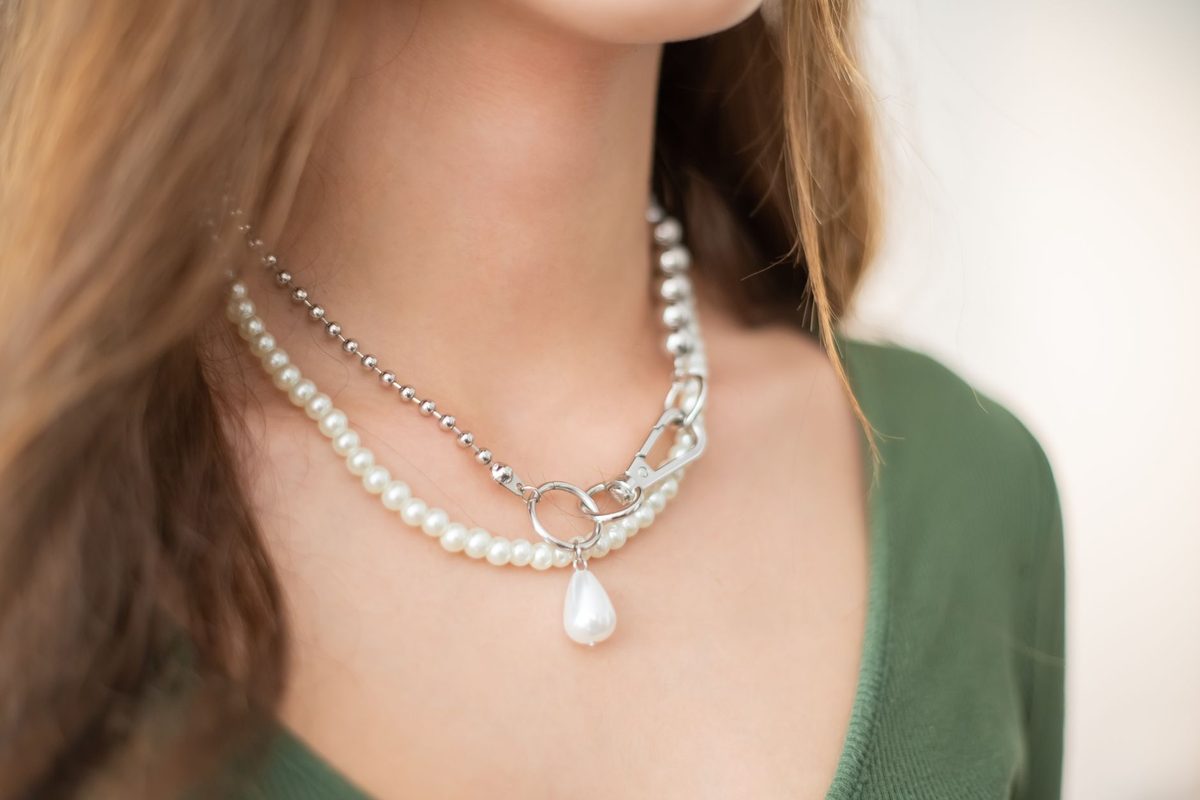
Your pearl necklace looks less luminous than it did in its box. You wonder whether it needs a stronger cleaner, a silver polishing cloth or the little ultrasonic machine used for a diamond ring. The necklace may simply carry residue, but pearls and their thread need a different approach.
The aim is to remove ordinary surface contamination without abrading the pearl or weakening its support. This guide gives you a restrained routine and clear stopping points. Our general jewelry cleaning guide is useful background, but a mixed piece should always follow its most sensitive component.
1. Distinguish residue from a damaged surface
Look at the necklace in diffuse daylight before cleaning. Note whether the dull area follows skin contact, appears beside drill holes or covers only certain beads. A photograph gives you a comparison later. Do not scrape a questionable patch with a fingernail or test it with a chemical.
Pearls have a delicate surface compared with common faceted gemstones. GIA's pearl care guide explains that abrasion, heat and chemical exposure can affect them. It also notes that some pearls have treatments whose appearance may change. The appearance alone does not identify the pearl or its treatment.
Ask the seller or jeweler what the piece contains and whether it has special care instructions. A pearl-looking bead may be an imitation, and a necklace may combine pearls, plated metal, adhesive and thread. Unknown construction is a reason to keep home treatment minimal.
Set aside a strand with damaged thread, loose fittings or a visibly compromised pearl. Cleaning cannot make its structure safe. An inexpensive inspection can be more useful than buying another cleaner when the real issue is the attachment or surface condition.
2. Use a simple after-wear routine
GIA recommends a soft, clean cloth after wearing cultured pearls and warns against ultrasonic and steam cleaners. Keep a dedicated nonabrasive cloth for the necklace. A metal polishing cloth can contain cleaning compounds and should not be treated as an interchangeable fabric.
Lay the necklace on a clean, soft surface and wipe each accessible area gently. For ordinary residue, use a cloth only slightly dampened with clean water if the piece's care instructions allow it. Avoid dragging the strand across a gritty counter or pressing beads against each other.
| Situation | Sensible first step | Avoid | Stop when |
|---|---|---|---|
| Light residue after wear | Gentle soft-cloth wipe | Abrasive polishing or vigorous rubbing | Surface remains uneven or looks damaged |
| Known strand needs fuller cleaning | Ask about a pearl-safe method and thread condition | Long soaking without construction advice | Stringing is worn or materials are uncertain |
| Clasp is dark or dirty | Ask for separate metal assessment | Letting silver dip reach pearls | Cleaning requires aggressive treatment |
| Thread or knots look stretched | Arrange stringing inspection | Continuing to wear while testing cleaners | Support is visibly compromised |
| Pearl is glued into a fitting | Follow maker instructions | Immersion and solvent experiments | Attachment moves or adhesive is uncertain |
GIA allows occasional warm, soapy cleaning for suitable pearl jewelry and says stringing must be fully dry before wear. That does not make an unknown glued pendant or worn strand a candidate for soaking. Ask the jeweler to approve a fuller method for the actual construction.
3. Keep products and heat away from the necklace
Put pearls on after applying perfume, hair products and cosmetics, once those products have settled. Remove them before washing, swimming or chores involving cleaners. This habit limits exposure; it does not make every product safe if applied directly to the strand.
GIA identifies perfumes, cosmetics and acids among substances that can harm pearls. Do not try vinegar, alcohol or a household descaler to remove a stubborn mark. A cleaner labelled for precious metal is not automatically suitable for every stone attached to it.
Avoid leaving the necklace in direct heat or a parked vehicle. Let it dry at room conditions on a clean soft surface after a damp wipe. Do not speed the process with a hairdryer, radiator or steam. Gentle handling matters as much as choosing the liquid.
Our showering and swimming guide covers the wider wearing decisions. The case against keeping a pearl necklace on for convenience is repeated exposure and unnecessary stress on the stringing. Removing it helps only when it then goes somewhere protected.
4. Inspect the thread and store the strand flat
Stringing is part of the jewelry, not disposable packaging. Check whether gaps have appeared, knots have shifted or the connection at the clasp is fraying. A strand that catches or stretches deserves a jeweler's attention before the next outing.
Do not prescribe automatic annual restringing for every necklace. Wear frequency, thread material and construction affect the need. Ask for a condition-based assessment and a review plan, especially for a strand worn often. A rarely used sound necklace and a frequently worn damaged one should not receive the same instruction.
- Place the necklace flat in good light and inspect the clasp attachments and visible thread.
- Note changed gaps, fraying, damaged knots or beads that no longer sit as expected.
- Ask a jeweler whether cleaning, restringing or attachment repair is needed first.
- Discuss thread choice, knotting and clasp work as part of the quote rather than assuming one method suits every design.
- At collection, check the finished length, clasp operation and how the strand lies before returning to wear.
Store it separately in a soft, breathable pouch or lined compartment at stable room conditions. Avoid hanging a heavy strand by its clasp for long periods. Keep it away from harder stones and rough metal, following our jewelry storage guide.
5. Know when a professional visit is the smaller job
Stop home care if the surface is peeling, the lustre stays patchy after a gentle wipe or an attachment moves. Ask the jeweler to explain whether they see residue, damage, treatment change or structural wear. Some problems cannot be erased without replacing a component, and a cleaning promise should not hide that possibility.
For budgeting, a straightforward strand inspection and clean typically needs a CAD 0-80 allowance, while restringing typically needs CAD 60-200 depending on length, knotting and clasp work. These are editorial planning ranges, not shop quotations. Complex repairs and replacement pearls require a separate estimate.
Keep photographs and the care instructions with the necklace's records. Consult our gemstone directory when separating pearls from harder pieces, but use the maker's construction advice for treatment decisions. A gentle routine and sound stringing give you a better result than frequent aggressive attempts to chase brightness.
— Simply Jems Editorial Studio, Canadian artisan roots since 2014.
Frequently Asked Questions
Can I put pearls in an ultrasonic cleaner?
No: GIA advises against ultrasonic and steam cleaning for pearls. Have a jeweler assess mixed-material pieces rather than cleaning the metal by a method that risks the pearls.
How often must a pearl necklace be restrung?
There is no single interval that fits every strand and wearing pattern. Ask for inspection when thread stretches, knots change or the clasp attachment looks worn, and agree a review interval for frequent wear.
Can polishing restore damaged pearl lustre?
A gentle clean can remove some residue, but polishing is not a reliable way to reverse nacre damage. If lustre stays uneven, stop and ask a jeweler to distinguish surface film from wear or treatment changes.